How to Fish's Drunk Physics Are the Real Catch — Why Solo Players Are Missing the Point
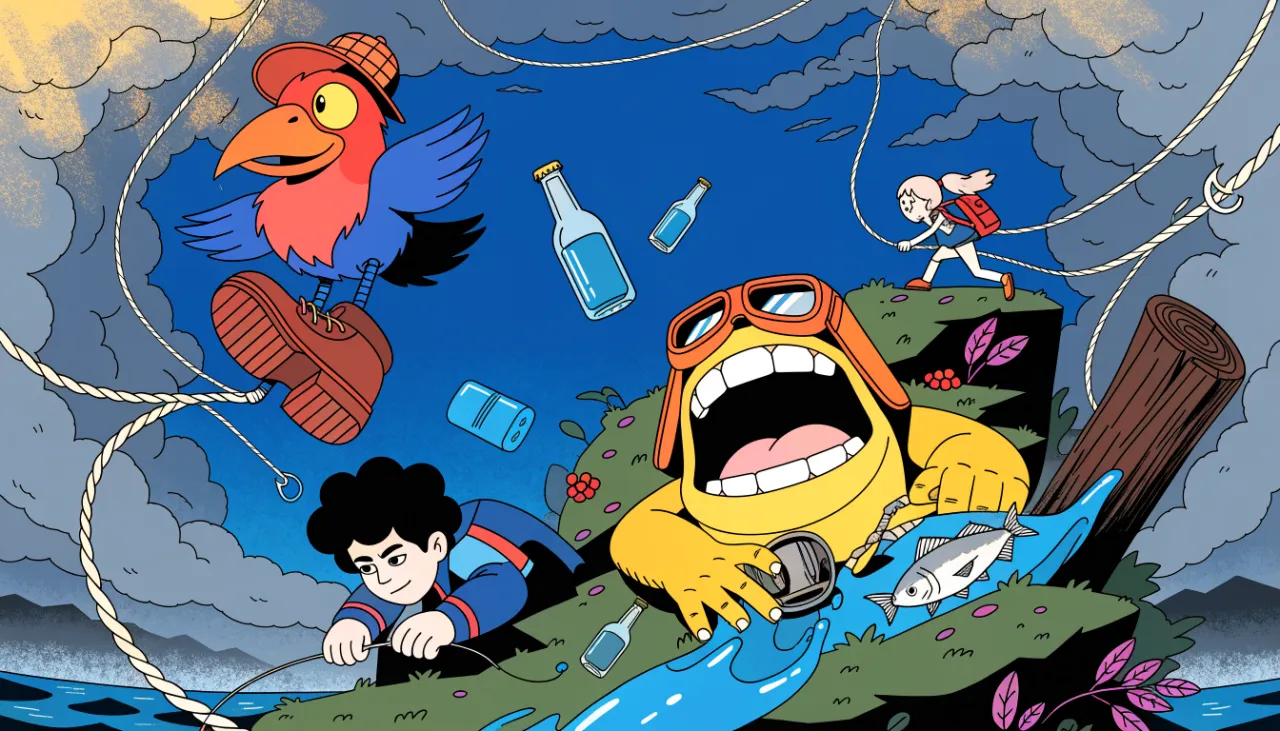
After three months, How to Fish has settled into its niche as a party game disguised as a fishing sim. And that's exactly why it still holds up — if you know what you're buying.
The core loop is deceptively simple: cast a line, wait for a bite, reel it in. But the moment you add a drunk character model and real-time wind physics, every cast becomes a gamble. A perfect arc feels glorious, but one wrong nudge sends your hook sailing into a buddy's back. That jank isn't a bug; it's the design. The game clearly understood that precision fishing is boring when you're stranded with friends and beer.
This is where the game's multiplayer shines. Up to four players trying to coordinate casts without crossing lines or accidentally hooking each other creates genuine slapstick. Sessions stay short enough to stay fresh, and the loose controls mean everyone is equally bad — which is the great equalizer. Compare that to Geometry Dash, where pixel-perfect timing is everything. Here, precision is the enemy of fun.
For $7.99, that's a steal for a few evenings of chaotic co-op. But solo? Skip it. The charm comes entirely from shared absurdity. Without friends laughing at your terrible cast, you're just fighting drunk physics alone.
So, community: Is How to Fish a better party game than a fishing sim? Or does the lack of depth eventually wear thin even with friends? What's your best (or worst) accidental hook story?
Replies (1)
Log in or create an account to join the discussion.
Takes me back to the Dreamcast days with Sega Bass Fishing, except cranked up on pure local co-op chaos. There is a lot of old-school arcade charm in games that refuse to take themselves seriously and just want you and your buddies shouting at the screen. Modern sims get too bogged down in gear stats, forgetting games used to just be fun, clumsy excuses to hang out.