How Wētā Workshop Turned a Whale Stomach Into a Living, Breathing Movie Set for Whalefall
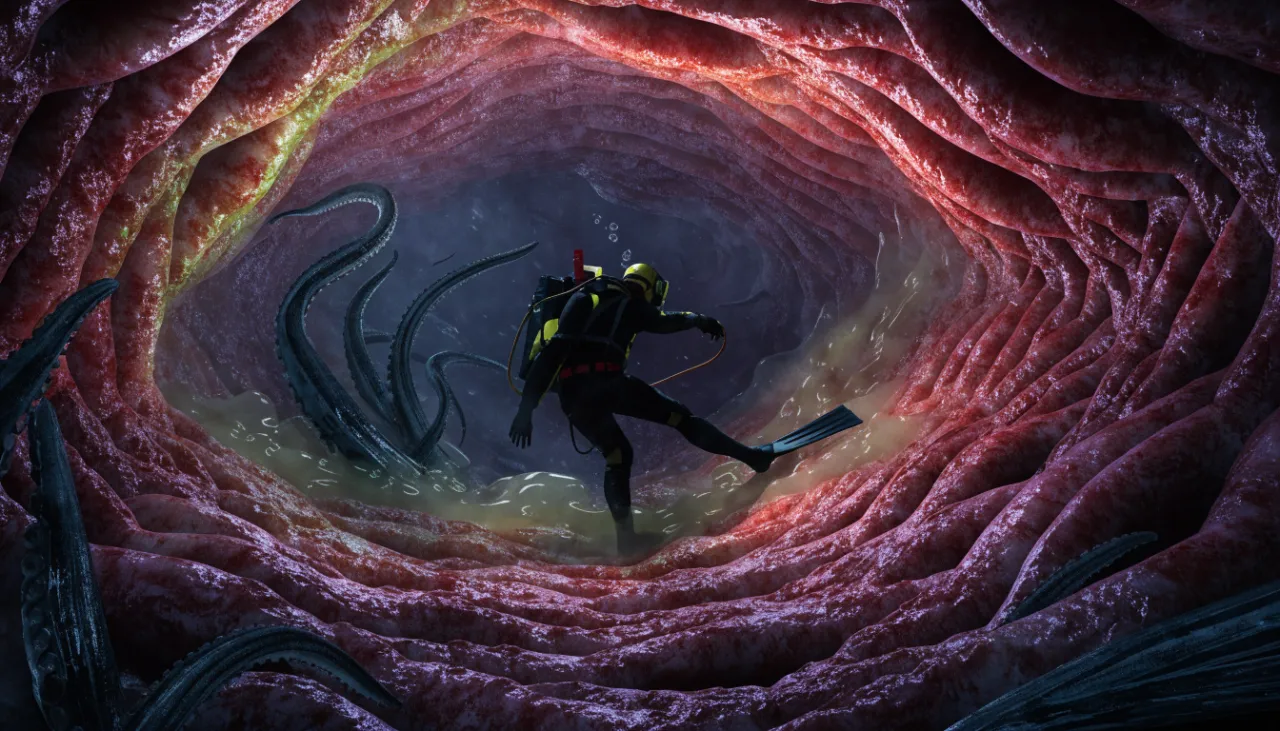
Survival horror fans who remember Austin Abrams from the recent Resident Evil adaptation will see him face a very different kind of terror in Whalefall. The thriller, which hit theaters in October, traps his character inside a sperm whale’s stomach after a solo dive goes catastrophically wrong. A new exclusive clip reveals the extraordinary practical effects that made that fleshy prison feel terrifyingly real.
Building a Breathing Organ
To sell the nightmare, production designer Ramsey Avery and the team at Wētā Workshop constructed four separate stomach sets. These weren’t static props—they had to move, contract, and even appear to digest the actor. On-set supervisor Ben Milsom explained that the stomach was treated as a character, not just a location. To achieve that, between 14 and 16 people worked simultaneously, puppeteering the fleshy walls to create rippling motions and rhythmic breathing. Real goop simulated digestive juices, and every shudder on screen was a practical effect, not animation. Avery stressed that it was crucial for Abrams to physically react to his environment in real time, which meant the actor was genuinely being jostled and soaked during filming.
From Squid Attack to Grief
The story follows Jay Gardiner, an experienced but reckless diver who is attacked by a giant squid, which is then swallowed by an 80-foot sperm whale. As Jay and the squid are slowly consumed, he must grapple with personal grief while plotting an escape from his organic cell. The claustrophobic premise echoes the tension of survival games like Subnautica or the underwater sections of Inside, where the environment itself becomes a relentless antagonist.
For PC gamers who appreciate immersive world-building, Whalefall’s commitment to practical effects offers a refreshing contrast to over-reliance on CGI. The physicality of the set translates into a raw, tangible dread that digital creations often struggle to match. Whalefall releases on digital platforms December 1, with a Blu-ray and 4K Ultra HD release following on January 12, 2027.
Would you dare to face a survival situation as intimate and grotesque as being swallowed alive, or do you prefer your deep-sea horror to stay on the monitor?
Source: Polygon.
Replies (0)
Log in or create an account to join the discussion.
No comments yet — be the first to roast it.