Phantom Blade Zero Delivers Stunning Kung Fu Action but Fumbles Its Story
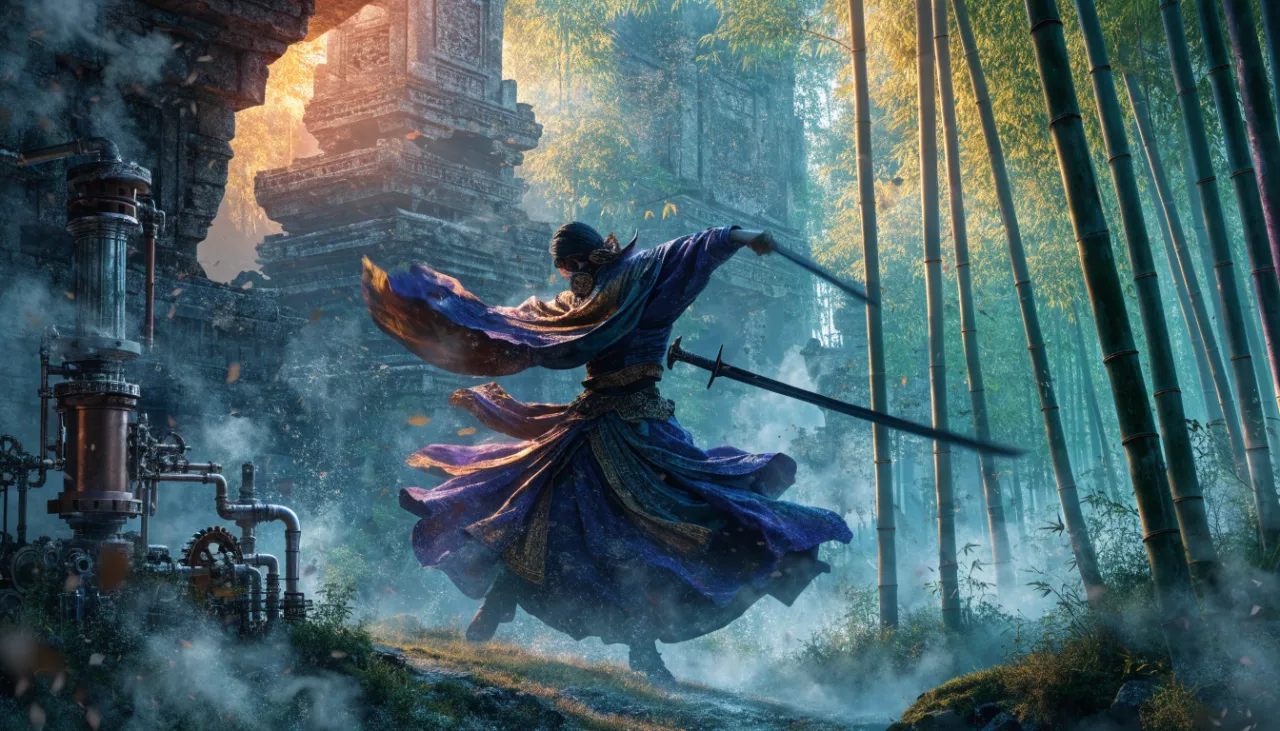
After years of punishing action games that demand flawless execution, Phantom Blade Zero arrives as a refreshing change of pace—at least on the surface. Developer S-Game’s wuxia-inspired title, launching October 29 for PlayStation 5 and PC, celebrates the cinematic beauty of kung fu fights rather than gatekeeping them behind brutal difficulty. Yet the game’s own design choices sometimes undercut that very spectacle.
A Story That Refuses to Hold Your Hand
You play as Soul, a legendary swordsman with only 66 days to live thanks to a failing artificial heart. The setup throws you into a dense world of Sha-Chi energy, Maskwalkers, and the Order—terms dropped with little explanation. Phantom Blade Zero embraces a narrative style common in Chinese donghua and novels, where exposition is scarce and understanding unfolds gradually. This approach can frustrate at first, but those who trust the process will uncover a fascinating blend of traditional fantasy and steampunk, where cyborg warriors and mystical forces coexist in beautiful, steam-veiled landscapes.
Unfortunately, Soul himself remains a flat protagonist—driven by revenge and honor but lacking emotional depth. The story’s true strength lies in its worldbuilding and the struggles of ordinary people caught in conspiracies, not in its central hero.
Combat: A Visual Feast with Repetitive Moves
S-Game aimed to recreate the sleek, breathtaking moves of 1990s kung fu films, enlisting action legends Donnie Yen and Kenji Tanigaki as consultants. The result is a combat system where every button press triggers beautifully choreographed sequences. Soul spins, slashes, and stretches into impossible poses, making fights feel like a martial arts movie.
Mechanically, you chain normal and heavy attacks while managing a Sha-Chi stamina bar, parrying enemy blows, and swapping between two primary weapons. Weapon swapping instantly refills stamina, and with upgrades, the bar becomes so trivial that you can ignore it entirely after a few hours. This undermines the intended rhythm and makes combat boil down to mashing the same few buttons, with flashy finishers triggered by single inputs. The 30 primary and 25 secondary weapons add visual variety—from dual swords to a dragon-head water cannon—but the underlying loop grows repetitive.
Why It Matters
For players who adore wuxia cinema and prioritize style over mechanical depth, Phantom Blade Zero is a dream. Its fight choreography is unmatched, and the world is a captivating place to explore. However, those seeking a challenging, nuanced action system or a compelling narrative may find it lacking. The game’s commitment to spectacle is both its greatest triumph and its most limiting factor.
What do you think—does a game need deep combat to hold your attention, or can stunning visuals carry the experience? Let us know in the comments.
Source: Polygon. Summarized and rewritten by RoastedGames.
Replies (0)
Log in or create an account to join the discussion.
No comments yet — be the first to roast it.