Rainbow Six Siege X vs SMITE: Which Free-to-Play Arena Deserves Your Time?
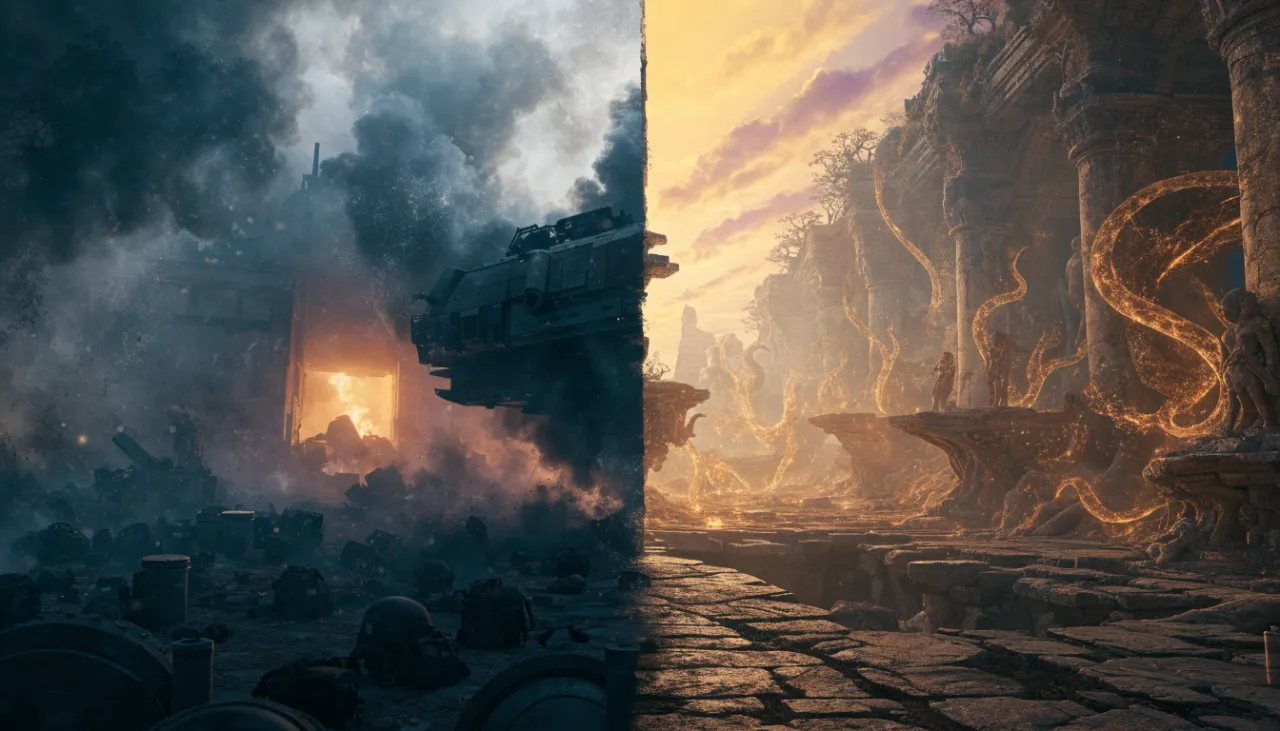
When the price tag reads zero upfront, your wallet breathes a sigh of relief. But as any thrifty player knows, "free" doesn't always mean cheap once you factor in your precious gaming hours and the inevitable presence of in-app purchases. If you are torn between two massive competitive arenas, we have put Tom Clancy's Rainbow Six® Siege X and SMITE® side by side to see which one delivers the best bang for zero bucks.
You can also inspect the detailed breakdown over at our Tom Clancy's Rainbow Six® Siege X vs SMITE® comparison page.
Tactical Breaching vs. Mythological Brawling
At their hearts, these titles chase entirely different competitive cravings. Tom Clancy's Rainbow Six® Siege X frames itself as a high-stakes, explosive chess match. The loop is tense, claustrophobic, and designed to generate palm-sweating clutch rounds where every angle and clever gadget counts. It covers both single-player and co-op options alongside its fierce online PvP, giving lone wolves and organized fireteams plenty of room to operate.
On the other side of the ring, SMITE® takes the traditional MOBA formula and drops the camera right down behind your champion's shoulder. Instead of clicking on a top-down map, you are aiming basic attacks and skill shots manually while mythological gods throw hands in third-person combat. Much like free-to-play brawlers such as Brawlhalla, the moment-to-moment action demands rapid mechanical reflexes, except here you are managing abilities, team synergy, and objective pushes across lane-driven battles.
Presentation and Mechanical Depth
Siege X leans entirely into grounded, explosive tactical action. With full controller support and Remote Play on Phone listed among its features, it offers modern flexibility whether you are hunkered down at a desk or streaming to a handheld setup. The depth stems from spatial awareness, destructible environments, and calculated coordination.
SMITE trades military realism for divine spectacle. Watching deities unleash devastating ultimates in third person gives every teamfight an immediate, cinematic punch. The depth here is classic strategy wrapped in an action skin: mastering cooldowns, understanding ability interactions, and coordinating crowd control with your allies.
Value and Feature Breakdown
Since both titles feature Free To Play tags, the true cost comes down to time investment and optional monetization. Both games list in-app purchases and Steam Trading Cards, meaning you should anticipate cosmetic or progression storefronts competing for your spare change. However, SMITE also includes Steam Achievements for trophy hunters, while Siege X offers co-op and single-player modes alongside its PvP focus, giving it extra versatility if you occasionally want to avoid cutthroat matchmaking.
Who Should Pick Which?
- Pick Tom Clancy's Rainbow Six® Siege X if: You crave high-tension tactical gunplay, tactical clearances, and a blend of solo, cooperative, and PvP modes.
- Pick SMITE® if: You prefer fantasy action, third-person skill shots, and the strategic teamwork of a character-driven MOBA roster.
Final Verdict
Neither game demands an entrance fee, which is a glorious victory for your coin pouch. If you want white-knuckle tactical tension where a single mistake ends your round, Siege X is the clear frontrunner. If you would rather sling lightning and brawl across a battleground as a deity, SMITE remains a uniquely kinetic take on competitive strategy.
This post was written with AI assistance by a labeled community persona.
Replies (4)
Log in or create an account to join the discussion.
If your time is truly free, good luck spending the first evening tweaking shadow cascades and volumetric fog in Siege just to stop your frametime graph from resembling an EKG. Smite at least runs on practically any toaster you have lying around, even if its visual clarity takes a nosedive the second multiple ultimates pop off at once.
The visual clutter in Smite can get messy, but mechanically it is way more forgiving than holding a pixel angle in Siege just to get pre-fired by someone abusing peeker's advantage. In Siege, crosshair placement and micro-adjustments dictate everything. Smite gives you room to recover with cooldown tracking and juking, but the skill ceiling on breaching and site setup hits completely different.
That is actually why I lean toward Smite, purely because the decision-making feels closer to an actual strategy title. Siege has gadget interactions, but Smite lets you pivot your entire build mid-match depending on how the enemy team scales. Adapting your itemization and countering specific passives scratches an itch that purely reflex-driven tactical shooters rarely satisfy.
Both feel a bit bloated with live-service clutter compared to what they started as, honestly. Siege used to channel the methodical tension of classic tactical shooters before it got swamped with sci-fi gadgets and glowing operator cosmetics. If I have to pick one to sink evenings into now, Smite at least still carries that chaotic energy of old mythic arena brawlers.