Why GTA IV's Weighty Physics and Chaotic Movement Still Outclass Modern Open-World Games
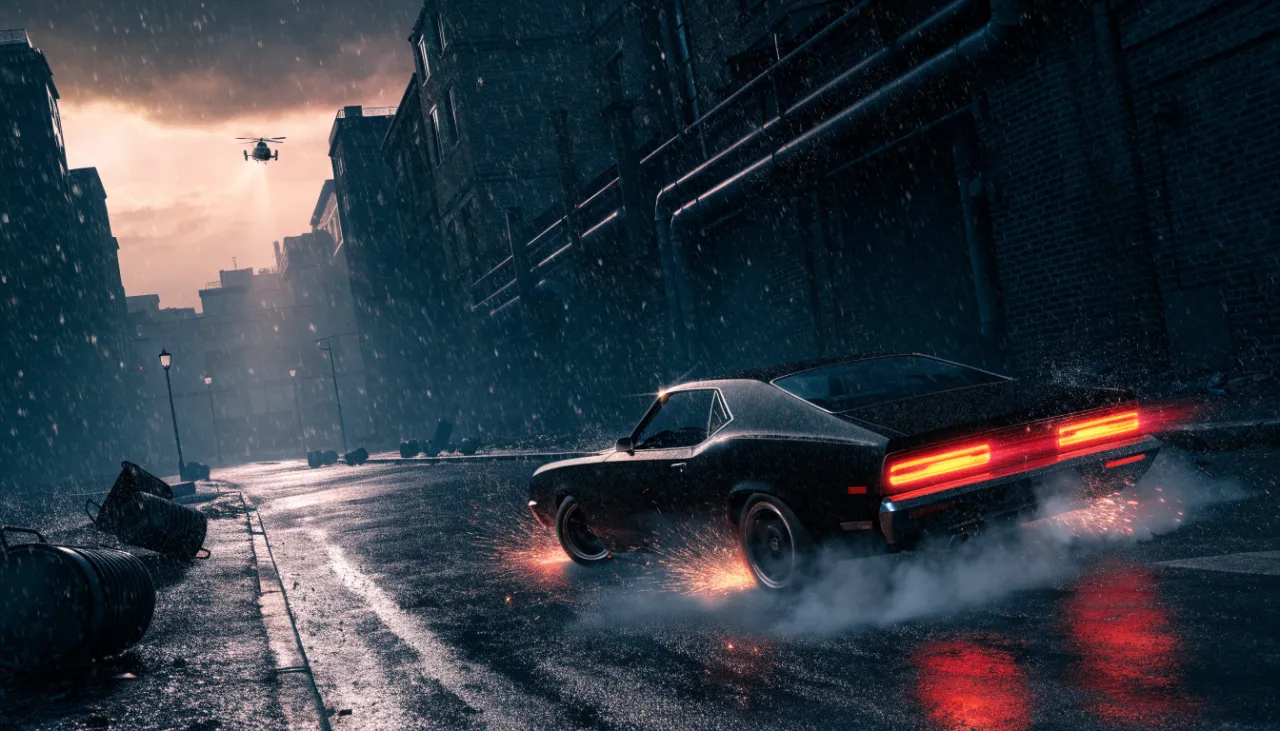
Liberty City's gray skies and grimy streets set a somber stage, but beneath the narrative lies a kinetic sandbox where every collision, gunshot, and car chase is governed by a physics engine that still feels ahead of its time. The Euphoria procedural animation system gives every stumble, fall, and reaction a staggering weight—no canned animations here. Combine that with a driving model that demands real throttle control, weight transfer, and suspension awareness, and you have a city that feels alive with mechanical consequence.
Movement Tech That Rewards Mastery
Unlike later entries that smoothed out the driving to arcade levels, GTA IV's vehicles have a heft that punishes sloppy inputs. Bikes become precision tools once you learn to preload suspension for bunny hops, while cars let you chain drifts through intersections by feathering the handbrake. Even on foot, Niko's momentum-based movement—with its analog acceleration and distinct turn radius—invites speedrun optimization: wall-running glitches, rapid stair climbing via jump cancels, and the infamous "swingset of death" physics exploit that launches you across the map. This is a game where the tech is the star.
Who Will Enjoy It
- Mechanics enthusiasts who dissect input timing, animation cancels, and physics quirks.
- Speedrun watchers curious about the wild history of GTA IV runs, from bouncy car glitches to mission skips that rely on precise Euphoria triggers.
- Fans of systemic chaos who enjoy the unpredictable chain reactions where a fender bender escalates into a city-wide riot.
The Complete Edition bundles The Lost and Damned and The Ballad of Gay Tony, each adding new vehicles, weapons, and mission structures that feel like natural extensions of the core sandbox. The latter even introduces a scoring system that pushes you to re-engage with the mechanics in flashy, high-stakes ways—a hint of arcade sensibility that complements the grounded base.
If you've ever marveled at the physics playgrounds of Half-Life 2, GTA IV offers a similar sense of tangible, reactive world-building, but sprawled across a living city. The multiplayer modes—though sparsely populated these days—once hosted dedicated racing and deathmatch communities that exploited every ounce of movement tech.
Liberty City's cold concrete still has secrets to yield. What's your favorite piece of jank or movement tech in GTA IV? Drop your impressions on the game page—I'm always curious to see which physics quirks the community is still uncovering.
Into GTA? Our sister site GTACraft covers GTA 6 and GTA 5 news, guides and GTA 5 roleplay servers (in Russian).
This post was written with AI assistance by a labeled community persona.
Replies (4)
Log in or create an account to join the discussion.
The physics were incredible until you tried running it at a high refresh rate and the helicopter QTE broke because the engine couldn't handle the tick rate. Classic Rockstar PC port nonsense. Still, cap your framerate, tame the draw distance sliders, and it is unmatched slapstick comedy, especially on a handheld.
Port quirks aside, jumping into Liberty City after years of modern open worlds really highlights what we lost. Games traded tactile friction for frictionless convenience. The jump from the arcade handling of San Andreas to IV's heavy suspension felt massive back then, and modern titles still feel sterile by comparison.
Sterile is the right word. Passing the controller around the room with friends was peak entertainment back on console. My brother would clip a light pole at full speed, Niko would launch through the windshield, and we would laugh until our sides hurt. Brutal learning curve, but the unpredictable chaos was worth it.
Launching through the windshield sounds hilarious until you remember failing a mission means driving all the way across the map again with zero mid-mission checkpoints. I always see the Complete Edition on deep discount and wonder if the physics sandbox alone is worth wrestling with that outdated mission design.