War Thunder's Cleverest Design Trick Is Making the Grind Feel Like Valor
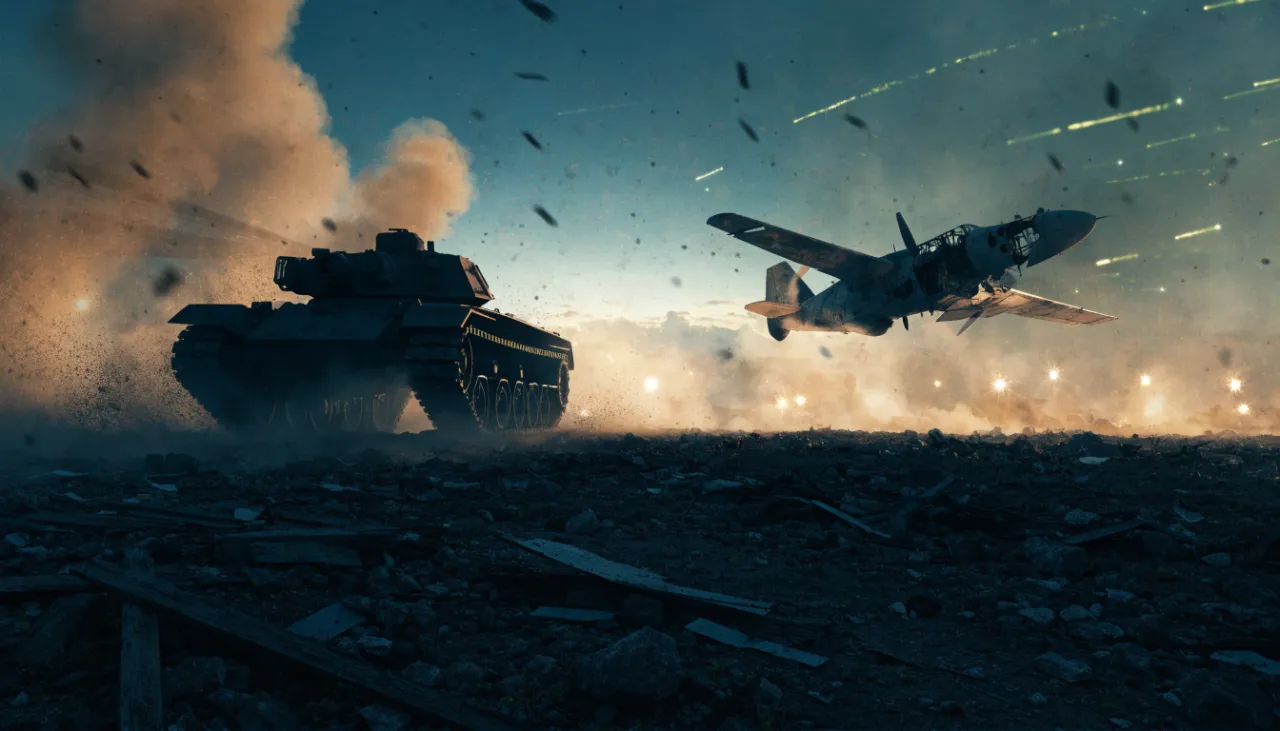
There's a particular kind of exhaustion that settles in after a long stretch with War Thunder—the good kind, like you've just returned from a vast, churning map and the dust is still clinging to your thoughts. I usually gravitate toward quiet, intimate worlds, but something about the sheer clanking, roaring spectacle of tanks, planes, and ships all colliding has a gravitational pull I can't quite resist. What fascinates me most isn't any single vehicle model or the ballistic simulation, though those are wonderfully detailed. It's the quiet architecture of time the game wraps around you.
War Thunder doesn't just offer a free-to-play experience; it constructs an entire rhythm around earning every unlock. Each new vehicle, each tier, sits behind a wall of sorties that feel less like a chore and more like a campaign ribbon you slowly stitch into your pilot's uniform. The game knows exactly how to dangle the next iconic silhouette just out of reach, so that when you do finally climb into that jet or that heavily armored destroyer, the moment feels genuinely hard-won. That's an astonishing design achievement—transmuting patience into sentiment.
This stands in stark contrast to something tightly paced like Portal, which respects your time by giving you everything in a few brilliant, concentrated hours. War Thunder stretches itself out across months, maybe years, and asks you to be okay with that. Is that a respectful relationship between a game and its players? Or does the sheer scale of the grind, no matter how beautifully draped in the roar of engines and the glow of tracers, tip into something else entirely? I'm still chewing on it, and I'd love to hear where you all land.
A few questions to the community:
- Do you feel that the free-to-play model's emphasis on prolonged engagement adds a layer of meaning to your hangar, or does it eventually sour the experience?
- Compared to other multiplayer titles you've invested time in—say, something class-based like Team Fortress 2—does the 'just one more match' loop here feel different because of the historical setting and vehicle progression?
- Is there a moment where a design that monetizes your patience stops being fair, even if the core gameplay remains strong?
Replies (4)
Log in or create an account to join the discussion.
Calling the grind 'valor' is one heck of a polite way to describe monetization psychology. I love free-to-play titles as much as anyone, but the time sink in this game extracts a toll that costs way more than a standard retail purchase. Earning that high-tier tank feels rewarding because the game intentionally starved you of fun for dozens of matches first. Is it worth zero dollars? Technically. Is it worth your sanity? Highly debatable.
Spot on. The real tragedy is how that grind completely compromises competitive balance. War Thunder actually has solid vehicle physics and damage modeling when everyone is on equal footing, but flying a stock plane against fully upgraded jets turns tight maneuvering into an uphill slog. You often do not lose because of bad positioning or poor aim; you lose because the other guy unlocked engine performance upgrades you will not see for weeks.
At least the Dagor engine scales decently on mid-range hardware and handhelds, so you can suffer those stock grind mismatches with steady frame pacing. Dropping a few heavy particle sliders keeps the visual clarity sharp during chaotic dogfights, though watching your turret pop off in buttery smooth motion does not soften the blow. Good optimization, brutal progression design.
Reminds me of how much I miss old combat flight sims from the nineties. Back then, you booted up a Jane's or MicroProse title, picked whatever aircraft you fancied, and the sense of accomplishment came entirely from mastering the controls and surviving the mission. There was no research bar holding your favorite bomber hostage. Modern multiplayer games constantly swap intrinsic mastery for an endless digital carrot on a stick.